How to Start Composting in a Small Apartment: The 2026 Urban Guide
The Urban Alchemist: How to Start Composting in a Small Apartment in the Modern Era of 2026
One of the most persistent and frustrating hurdles to sustainable living for the modern city dweller has always been the effective and hygienic management of organic waste. We often feel that because we lack the traditional backyard, the sprawling garden, or the communal compost pile, we are physically forced to participate in a system that sends our valuable food scraps to a landfill, where they decompose anaerobically and produce harmful methane gas. However, as we move through 2026, the technology and specialized techniques for "Indoor Composting" have reached a level of sophistication and aesthetic integration that makes it accessible, odorless, and even rewarding for everyone. This is the definitive, high-end guide on How to Start Composting in a Small Apartment without compromising your home's "Lounge" atmosphere. Composting is far more than just a waste reduction strategy; it is a profound act of participating in the "Circular Economy" at a fundamental household level. It is the art of biological alchemy-turning your daily "waste" into "black gold"-a highly concentrated, nutrient-rich fertilizer that can fundamentally transform the health and vibrancy of your indoor plant collection and your balcony sanctuary. In the core Lounge philosophy, we place immense value on the connection between our indoor environments and the restorative power of the natural world (as explored in our Art of Hygge guide). Composting is the ultimate expression of this connection, closing the loop between what we consume and what we create. Let us explore how you can become an urban alchemist in your own kitchen, regardless of your square footage.
The Urban Composting Blueprint:
- 1. Choosing Your Biological Engine: Bokashi vs. Vermicomposting
- 2. The Bokashi Protocol: Rapid, Odorless Microbial Fermentation
- 3. Vermicomposting 2026: Partnering with the Earth's Premier Recyclers
- 4. Electric Dehydrators: The High-Tech "Instant" Compost Solution
- 5. The Art of Maintenance: Engineering an Odor-Free Environment
- 6. Utilizing Your Harvest: Fertilizing Your Indoor Forest
- Frequently Asked Questions about Modern Apartment Composting
1. Choosing Your Biological Engine: Bokashi vs. Vermicomposting
The first and most critical step in mastering How to Start Composting in a Small Apartment is selecting the specific biological "engine" that best aligns with your daily routine and your comfort level. There are two primary "analog" methods that have become the standard for the 2026 urbanite: Bokashi and Vermicomposting. While both successfully transform organic matter into fertilizer, they operate on entirely different biological principles and have different spatial requirements. Bokashi is fundamentally a fermentation process. It utilizes specialized, anaerobic microbes to "pickle" your food waste in an airtight environment. It is incredibly compact and can handle virtually any food waste, including meat, dairy, and citrus. Vermicomposting, on the other hand, utilizes a specific species of composting earthworms (usually Red Wigglers) to physically consume and break down your food scraps into "castings." It is a fascinating, living ecosystem that results in what is arguably the most powerful and nutrient-dense organic fertilizer on the planet. Your choice will ultimately depend on the volume of waste you produce and whether you are comfortable "hosting" a colony of helpful worms in your home.
2. The Bokashi Protocol: Rapid, Odorless Microbial Fermentation
[caption id="attachment_4287" align="alignright" width="300"]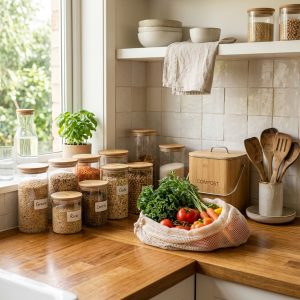 From waste to wonder. Master the art of composting in your own apartment.[/caption] For many apartment dwellers, the Bokashi system is the preferred point of entry. The system is elegantly simple: it consists of an airtight, specialized bucket (often with a spigot to drain "Bokashi tea") and a supply of "Bokashi Bran"-a substrate that has been inoculated with beneficial Effective Microorganisms (EM). You simply add your daily food scraps to the bin, sprinkle a layer of bran, and use a dedicated tool to press out the air. Because the process is anaerobic (without oxygen), there is zero rot and, consequently, zero foul odor. It is perfectly suited for a minimalist Composting in a Small Apartment kitchen. In 2026, Bokashi bins have evolved from simple plastic buckets into high-end design objects, featuring matte-finish ceramics and stainless steel details that blend seamlessly into a premium Interior. Once your bin is full, it must sit undisturbed for approximately two weeks to complete the fermentation process. At this stage, the "pickled" waste is still physically intact but biologically transformed. To complete the process, this fermented matter must be buried in a "soil factory" (a larger container of soil on a balcony) or donated to a local community garden. It is a clean, hyper-efficient, and scientifically robust system for the modern urban sanctuary.
3. Vermicomposting 2026: Partnering with the Earth's Premier Recyclers
For those who seek a truly "closed-loop" and immersive biological experience, vermicomposting remains the absolute gold standard. A well-managed worm bin can live discretely under your kitchen sink, in a hallway closet, or on a shaded balcony. The worms act as nature's premier recyclers, consuming your organic waste and producing "castings"-a rich, earthy material that is essentially odorless and packed with beneficial microorganisms and plant-available nutrients. It is a wonderful way to maintain a tangible connection to the earth's natural cycles from the center of a concrete jungle. In 2026, the design of worm bins has been revolutionized. We now use multi-tray "vertical migration" systems made from recycled, breathable plastics or sustainably sourced wood. These systems allow the worms to move upward into fresh food, leaving the finished castings in the bottom tray for easy, mess-free harvesting. The secret to a flourishing worm bin is the "Balance of Bedding"-maintaining a 50/50 mix of food scraps ("greens") and carbon-rich material like shredded cardboard or dry leaves ("browns"). When managed with this intentionality, a vermicompost bin is one of the most rewarding and biologically productive aspects of a Zero Waste lifestyle.
4. Electric Dehydrators: The High-Tech "Instant" Compost Solution
If you identify as a "tech-first" individual or simply prefer a more "hands-off" and immediate solution, the 2026 generation of electric kitchen composters (often called dehydrators) is a revolutionary addition to the Smart Living ecosystem. These compact, countertop devices use a combination of controlled heat and powerful mechanical grinding to dehydrate, sterilize, and break down your food waste into a dry, shelf-stable material in as little as 4 to 8 hours. While the end product is technically a "pre-compost" (as it hasn't undergone the full biological breakdown of traditional methods), it can be mixed directly into your houseplant soil as a slow-release fertilizer or discarded in your regular trash without the mess, weight, or odor of wet food waste. These devices are fully integrated with your home's AI hub, tracking the specific weight and diverted carbon of the waste you produce, providing you with real-time data on your household's sustainability metrics. For the busy urban professional, it is the ultimate in convenience and odor-control technology.
5. The Art of Maintenance: Engineering an Odor-Free Environment
The primary and most significant fear that prevents individuals from starting their composting journey is the fear of odor. However, it is a biological fact that a correctly managed compost system should never emit a foul smell. If your bin smells, it is a diagnostic signal that something is fundamentally imbalanced in the ecosystem. In a worm bin, a sour smell usually indicates too much moisture or a lack of oxygen; in a Bokashi bin, it indicates an air leak that is allowing aerobic rot to take hold. In 2026, we utilize several "Pro Hacks" to ensure total success. Always chop your food scraps into small, 1-inch pieces to increase the surface area for the microbes or worms to work on. Utilize "Odor-Absorbing Carbon Filters" integrated into your bin lids as a secondary layer of protection. And most importantly, always maintain the "Brown to Green" ratio in your worm bin-shredded paper and cardboard act as a carbon "sponge" that absorbs moisture and provides structure for oxygen to flow. Composting is an act of engineering as much as it is an act of nature.
6. Utilizing Your Harvest: Fertilizing Your Indoor Forest
The moment of harvest is when the urban alchemist truly sees the ROI of their efforts. Once your worm castings are ready or your Bokashi soil factory has matured, you have access to the highest quality plant food available. Mixing these materials into the top few inches of your houseplant pots or using "Compost Tea" (the liquid byproduct) will lead to an almost immediate and dramatic improvement in plant vigor, leaf size, and overall resilience to pests and disease. By producing your own biological fertilizer, you are not only saving money but also eliminating the need for synthetic, petroleum-based chemical fertilizers that often arrive in single-use plastic packaging. You are creating a "Lounge" environment that is truly sustainable and biologically active from the soil up. You are no longer just a consumer of nature; you are a primary producer. This is the ultimate goal of the 2026 sustainable lifestyle.
Frequently Asked Questions about Modern Apartment Composting
Q: Will composting in my apartment lead to a pest problem? A: Not if you follow the "Bury and Seal" protocol. In a worm bin, always ensure your fresh food scraps are buried deep beneath a thick layer of dry bedding. In a Bokashi system, ensure the lid is always clamped tight. Pests are attracted to exposed, rotting food; composting, when done correctly, is a process of controlled decomposition that does not attract pests. Q: What is the maintenance time commitment for these systems? A: Remarkably low. A Bokashi bin requires about 30 seconds of attention per day (adding scraps and bran). A worm bin requires about 5 minutes of attention once a week to feed and check moisture levels. The "Electric" solution requires only the push of a button. It is a high-impact, low-time-cost habit. Q: Can I compost meat and dairy in an apartment? A: Yes, if you use the Bokashi method. The specialized microbes in the Bokashi bran are capable of fermenting meat and dairy without the pathogens or smells associated with traditional composting. For vermicomposting, it is generally recommended to stick to fruits, vegetables, coffee grounds, and eggshells. To discover more about sustainable urban design, indoor forest creation, and the holistic Green & Eco lifestyle, visit our Green & Eco section. For a deeper look at the chemistry of the earth, explore the Wikipedia page on the Soil Food Web or research the latest Trends in Urban Agriculture and their role in global food security and climate resilience. Watch this professional and scientifically-backed guide to the best apartment composting strategies for 2026: https://www.youtube.com/watch?v=\_LhyjJUYzNk


